18 July 2020

It is indeed our dam – GERD the pacifier and pride of Ethiopians


Ethiopia, the land of origins, as Ethiopians often call it, is a landlocked country with lots of untouched and unused natural resources. It has got lots of rivers and water resources, but it is yet to use one of its biggest, the Blue Nile – Abay River as Ethiopia has just finalised building the largest hydroelectric plant in Africa called the Grand Ethiopian Renaissance Dam - GERD.

GERD is expected to change the lives of millions in Ethiopia and countries in East and horn of Africa once fully functional. It will indeed be a game changer and bring Ethiopia out of poverty. It is going to be crucial for Ethiopia’s economic growth and its path towards prosperity. More than 60 million Ethiopians will have access to basic electricity. It will also bring investments in different sectors including tourism, fisheries, and water transport. It is expected to reduce risk of flood in the Sudan. Despite all the promising benefits of the GERD, there is still a lot to do to see all these into practice.

Agreement with upstream countries, Sudan, and Egypt on a fair and equitable share of the Nile River should be reached at in the not too-distant-future. Ethiopia has always been ready for that, but the much sought and expected agreement could not be reached at straightforwardly as the upstream countries seem to be stuck in their colonial era agreements of 1929 and 1959 and the benefits the old and outdated agreement grants them, especially to Egypt.  In this day and age, it is unreasonable and injudicious of the upstream countries to expect Ethiopia to agree to a monopoly over the Nile waters based on the colonial era agreements signed among Egypt, Sudan and Britain, to which Ethiopia is not a signatory. Ethiopia has no intention of hurting any country but has clear, legitimate and moral demands here. Honourable use of its water resources. Equitable share of Nile waters. Respecting Ethiopia’s sovereign rights. Meeting its developmental needs and thriving together with others including upstream countries. In general terms, it is all about Mutual Benefits, Reciprocity, and Sovereign Equality. This is 21st century, where we are interdependent on one-another and should cooperate; but that cooperation should be mutually sought based on mutual interests. It is not time for one side wins all and others remain bystanders.

For Ethiopians GERD is a pacifier. It is a sign of national pride that brings Ethiopians together. In fact, their pride has many reasons. More than anything else, Ethiopians have made financial sacrifices. The  cost of the dam, which is estimated to be more than $5billion has been largely covered by Ethiopians and friends of Ethiopia.  Hence there is a sense of ownership of the biggest developmental work Ethiopia has undertaken. GERD is a unifier and has almost no political boundaries amongst Ethiopians. For Ethiopians both in Ethiopia and the diaspora, GERD is more than a project. It is more than a political interest. It is about belongingness. It is about the Ethiopian identity.

The social media campaign by Ethiopians and friends of Ethiopia under the hashtag #ItsMyDam brought together activists, experts, politicians, commentators and those in love with the land of origins. Here are a few posts on twitter globally including one from the wonderful and creative Anna Chojnicka
The Campaign also brought the attention of international media, here is one from Turkish TV
The time is now for an agreement and equitable share of the Nile waters. It is all about good will, which Ethiopia has in abundance. Time for compromise and agreement as we have past the one party wins all era. The GERD - the unifier is at its important milestone. Ethiopia is determined, ready and willing. Better days ahead for all of us.

25 May 2020

Plucky and benevolent woman behind the success stories of Community Organising dies from Covid19


Former colleagues and friends of Josephine Mukanjira, who died from Covid19 complications in Mid-April, pay tributes to a stupendous woman who was behind the many success stories of Community Organising in the UK. “Jo was simply the pillar of community organising and the backbone of our work” said one former colleague from Citizens UK, a charity that organises communities to act together for power, social justice and the common good.

Josephine Mukanjira descended from East Africa and had connections both to Uganda and Rwanda. Jo was very close to her mum and her extended family who live in Uganda and are devastated by the untimely tragic death of a woman who was the beacon of hope for the family. Jo, who had been in the UK for a long time, worked for Citizens UK for over 12 years in different capacities until September 2019 when she left the organisation. In the past few months, Jo worked for an organisation as an accountant. Just a few days before her untimely departure, Jo joined a prominent Chartered Governance organisation in the City of London, but Covid19 stole this woman of courage and her dreams were cut short. Neil Jameson, founder and former Executive Director of Citizens UK, who has been the backbone of the farewell organising for Josephine said, “Jo will be remembered as one of the kindest, most wiling and most loyal colleagues we had through those tough years of growth and challenge. She looked out for colleagues and rarely said ‘NO’. The very best of humanity and quiet, inspirational leader. So much missed. RIP Josephine”

Stephanie Leonard, tweeted, “Josie ensured my first month’s salary was paid up front so I could pay my rent when I started my job at CUK. She knew I needed help and went out of her way to support me. She always checked in on me when I would come to the office. She was such a gorgeous person. Such awful news.” Whereas another former colleague, Lydia Rye said in a tweet, “Jo was warm and terrifying (read my expenses were always late) in equal measure and my favourite person to gossip outside assemblies with. I cannot imagine being at CUK without her. Such desperately sad news.” Many other colleagues and community leaders used the social media platforms to pay their tributes among which are the following, Ana Franca-Ferreira, tweeted “Met Jo at 17 as a young intern. Saw her again at 24 at my first professional job, she made me feel at home. Every time I was in the office and Jo was there, I was at home. Heartbroken that she has gone but have the certainty that she rests with God. Thanks for your life Jo!” Another former colleague, Dermot Bryers tweeted, “So, so sad. I always loved seeing Jo when I came to Cavell Street. Love and condolences to her family, friends and colleagues.”

Among those who used twitter to pay tributes was, Bethan Angharad Lant, “I adored Josephine. She had such natural warmth. I looked forward to seeing her. May she rest in peace and rise in glory.” Others went onto Facebook to pay their respects. Paul Regan, one of the pioneers of Community Organising in the UK said, “This is a complete shock. Such kind and positive person. I find it difficult to believe. RIP Jo”. Whereas Rabbi Janet Darley, who also shared prayer and religious reflection at the zoom memorial, wrote on Facebook, “Such sad news. Such a lovely person. May her soul be bound up in the gathering of life. Her memory will surely be a blessing to all who knew and loved her”. Another former colleague and close friend, Emmanuel Gotora wrote on Facebook, “We’ve lost a true gem. Josie was a caring and kind-hearted colleague and much loved by all at Citizens UK. She had a wicked sense of humour and always had time to talk no matter how busy things were. Her calm presence greeted many of us at the office. She always had a smile and a never-ending secret stash of chocolate which she was always happy to share. Josephine was more than a work colleague - she was a friend - a rare combination. She loved being with people and always went above and beyond to lend a hand when needed. She loved a game of football too! I’ll always remember the football games in Weavers’ Field. I will miss you my dear friend Josie - rest in peace.”

Many people around the country meet their local community organisers, but there was one person behind these organisers, Jo. Some of her former colleagues used to even call her as, ‘organiser of organisers’. More tributes and reactions from colleagues and friends on twitter HERE and on Facebook HERE

Devastated and shocked by the sudden death of Jo, old and new colleagues, and friends joined the memorial zoom organised to commemorate her life on Tuesday 28th April. Fitting tributes and stories of a remarkable woman were shared by those who joined the memorial where we also had heart touching hymn and song, ‘Great is they faithfulness’ and ‘Who will speak if we don’t?’ led by Bernadette Farrell, hymnographer, composer of Catholic liturgical music and veteran Community Organiser. We were also joined by Jo’s mum and extended family from Uganda, who were indeed very grateful for the memorial service held in honour of their loved one. The memorial was also a reminder that much should be done to support Jo’s family as they mainly relied on her financial support following the death of her 2 brothers in the past few years. We have, therefore, launched a fundraiser to give Jo the best send-off she very much deserves. We are also keen to help her mum and the kids Jo was sponsoring in schools in Uganda. Here is the GoFundMe page, Paying Respect to Jo. Please donate and share. It is all paying back to a woman that helped many in the fight for social justice.  


21 May 2020

Together against an invisible enemy – why I joined the NHS volunteer responders program


Bekele as an NHS volunteer responder
I believe in one collective human family that can help one another and thrive together. When there is a challenge, we have to step in to help one-another. When there is happiness, good to cherish that together, if at all possible. For me, this is a world of interdependence where what affects one, affects the other. When we do something for others, it does not only benefit others, but we greatly benefit from what we are doing as well. The benefit is mutual. Hence it is more than vital for me to take up on voluntary works as much as possible and contribute my bits. Hence whenever possible, I try my best to contribute my share on a voluntary capacity. 
Bekele as London 2012 Olympics Games Maker

I was one of the Games Makers of London 2012 Olympics, which was one of my proudest moments in my life.  I am now up as an NHS Volunteer Responder, which makes me very proud.

When there was a call for NHS volunteers, I did not hesitate. I just asked myself ‘how I could be of help?’ What could I do? What could I contribute to the fight against this monster virus whilst supporting fellow citizens? I hence made my application and was approved in days’ time, which was excellent. Yet I was aware that more than 750000 people had applied to volunteer, which by itself was amazing and extraordinary. For me joining these people from around the country was a big deal on its own. People willing to step in and make a difference.

Coronavirus is an invisible enemy affecting many people. The impact of this monstrous virus is massive on the wider collective human family. I have lost 2 of my close ex-colleagues and friends to Covid19, whcih is very painful. Anybody could be infected by this ruthless virus. Hence vital for me to do whatever I could in the fight against this virus. Whilst doing this voluntary work, I get to know many wonderful people doing the right thing at the right time. We can only stamp out Covid19 collectively. For me, there is no small contribution. Hence when I decided to apply for this voluntary position, I was determined to do whatever I could in my capacity to be part of the wider fighters.

As a former refugee who made Britain his home, this gives me another opportunity to pay back. Hence doing this voluntary work means a lot for me.

8 May 2020

Dearest Jo, you never said goodbye


Life has not been fair recently. I have had some heartbreaks. The challenges of Covid19, the lockdown and its impact on life, the tragic death of a very good friend and former colleague called Mona Mahmoud and uncertainty about projects and future. To make it even worse I lost Josephine Mukanjira, one of my best friends and colleagues. Jo was someone who was there before I joined Citizens UK, where I have worked for over 9 years. She was someone who was always willing to help me. Someone extra generous to step in when there were challenges. Someone who would do everything on earth to make others happy.

Jo at Greater London Authority – 20th February 2020
When I last spoke to Jo on Wednesday 15th April to tell her about our colleague Mona’s death, she said she had already heard about it and that she was so sad. As we discussed about life, she sounded full of life and lots to live for. She told me that she was happy with her new job. That she was ready for the challenge the new opportunity would bring. I believed all what Jo said. As I had also met with her in person on February 20th when she attended a Community Sponsorship event I organised at the office of the Mayor of London, it all sounded good for me and that I was happy for her. But life was not fair for Jo. Despite the hopes and aspirations she exhibited in the conversation I had with her, she was taken away by the monster virus called Covid19. When I heard Jo’s departure within days of talking to her, I could not believe it.  I was in denial for some time. How could that happen? Somebody who sounded so healthy and fit going untimely is heart-breaking. But life is unpredictable. We only have today for granted.

I have lots of memories with Jo. I and Jo often had our lunches together. Lunch breaks were opportunities to catch up. But when we finished our lunches, Jo would say “I am sure you would at least wash your food container before taking it back home as I know you never cook.” Jo knew I do not cook often and that in fact I hated cooking and get nervous whenever I cook. Whenever I left the office at the end of the working day, I would say goodbye to Jo and colleagues and say look after the money. Jo would say, “Keep bringing the money and we would look after it”. We both laugh and hope to meet again. 

Jo was not only a colleague, but also family friend. She had been to my house on a couple of occasions. My family knew her very well. She was a delight to have around. Her life is now in the hands of Almighty God, whom she served wholeheartedly. She should be at peace in the company of angels. I pray that she is at peace.

Thank you, Jo, for everything you did for me. Thank you for your friendship, colleagueship and leadership.

Goodbye to you, Jo. Sleep tight my good old friend. Your memories will live with us as long as we are in this world. Rest in peace Jo.

28 March 2020

The monster virus has changed our lives – hoping to be back to normalcy soon


I have been living in London for many years. Commute to work daily and travel around London often using public transport, which is among the best in the world. 

One of the beauties of London is its busyness, its vibrancy and its cosmopolitan nature. The past few days have been very different. More spaces and visible social distancing in our public transports. Coffee shops, eateries, etc with lots of empty chairs. Shelves in most of supermarkets empty. Unusually different experience. Undoubtedly our lives have changed.

I understand there are more challenging days ahead as we fight the spread of Coronavirus, but we will rise up to the challenges and come out victorious. After all, the collective human family has been imaginative and creative and hence will come up with solutions soon. This is a reminder that we are interdependent. We are all in this together. What affects one, affects the other. Yes, we are in this as one human family, wherever we may be.

In the meantime, it is vital that we 

📣 Remember the most vulnerable people in our collective human family. 
📣 Remember the elderly, the homeless, refugees and all those with existing health issues. 
📣 Remember to keep doing the Right Thing.

Hope is what I have. Hopeful that we defeat this monster Coronavirus and come back to normalcy soon.

Till then keen doing the right thing, remain positive, safe, upbeat and kind. One world, one human family!


Written on 17th March 2020 before the UK Lockdown.

25 February 2020

Ethiopia goes to polls in August – hoping it gets it right


As I was in Ethiopia during the May 2005 election, I was one of the many hopefuls that thought democracy; tolerance and the rule of law were about to prevail in my home country. I was one of those very hopeful folks, who thought change was coming and Ethiopia was changing for the better.  My experience and learning in different parts of the country during the pre-election era in 2005 gave me hopes. The pre-election era was interesting, reasonably democratic, of course with some tolerable exceptions. As I had the opportunity to travel around the country in those days, I was able to talk to many people about the changes, hopes and the long road to democracy. That period was one of the most interesting in Ethiopia’s General Election history.

Post-Election Ethiopia was totally different. Killings, beatings, arbitrary detentions, all sort of miseries. The determination of the tyrannical regime to cling to power at any cost diverted the road to democracy and triggered the June 2005 protests that cost the lives of many innocent Ethiopians. The same stubbornness by the then regime resulted in the October/November 2005 massacre. In addition to the massacres, thousands were jailed, many people were forced to leave their homes and many others went on exile.

Ever since, all the elections were fake, undemocratic and questionable. It was all about how many percent of the vote the ruling party (EPRDF) would get, 98%, 99% or 100%. Totally shambolic.

Election 2020

As Ethiopia goes to polls in August 2020, there is a lot to expect. One thing for sure there will be winners and losers and it all depends on how we react to the wins and losses. If we ever think, it is now or never, then we have already lost the argument before even going to the polls. There could be disappointments when we are not able to mange our expectations. If the election is free and fair, that is a big deal on its own. That matters equally as the results. But if we are determined to see only the results that we want to see and anything else is unacceptable, then we have a problem. We have to remember election is not an end by itself and our wins or losses at an election wouldn’t mean the triumph or shortcoming of democracy. We need to hang on and work to change the course towards a stronger and more informed participation and strengthen the democratic process so that democratic elections become habits and that the next generation takes those democratic elections and principles for granted.

Hopes and fears

Managing expectation – it is more than important to manage expectations. Both prospective candidates, their parties, supporters and the wider electorates need to manage their expectations. They should at times be ready for disappointments, but ready to deal with it with grace, accept the results, move on and come back in the future, if they wish so. Hence vital to be ready for everything and avoid unwanted and unintended consequences. 

I have hopes that all parties and candidates will be able to manage their expectations and act responsibly. I also have fears that some may not be able to contain their angers because of the challenges of managing their egos. Hence vital to know that going into election is part of a democratic journey, not an end by itself.

The role of Media - The media, be it video, voice, print, online or offline, they all have roles to play. Social media like Facebook, Twitter and YouTube have big impact and significant roles to play. Hence vital to work on media accountability and professionalism in the run up to the general election and beyond. There should be credible sources of information that can avail timely information to avoid misinformation, disinformation and fake news. Facts and reliable data need to be available on time. Credible fact checkers need to be supported. People have to ask for the sources of information and check their credibility. There will be lots of opinion pieces and analyses based on individual perceptions and views. Hence, we need to cultivate the habit of asking for the sources of information every now and then and differentiate between news and opinions.

It takes us all to see the 2020 Ethiopian General Election succeed and exceed expectations of the usual and unusual suspects. Remember we all have stakes and cannot be silent on this important and momentous moment. Let us build democratic culture together and be voices of reasons.

9 January 2020

EILCO at World Press Freedom Day 2019


In January 2019, Co-Founder of the Ethiopian Institute for Leadership, Communication and Organisation (EILCO), Bekele Woyecha, and the Director of International Observatory for Human Rights (IOHR), Valerie Peay, met for lunch to discuss how they can work together. It was to their good fortune and the amazing transformation happening in Ethiopia, under the new administration of Dr. Abiy Ahmed, which led to the United Nations Educational, Scientific and Cultural Organisation (UNESCO) announcing that the annual World Press Freedom Day 2019 (WPFD 2019) will be held in Addis Ababa on May 1 – 3. The main event of World Press Freedom Day was co-hosted by UNESCO, African Union (AU) and the Federal Democratic Republic of Ethiopia with close to a thousand journalists world-wide descending on the capital of Ethiopia for a three day conference held at the UN Economic Commission for Africa (ECA) and AU buildings. As Valerie Peay commented at the reception for the launch of the EILCO-IOHR joint initiative for WPFD 2019, at the Ethiopian Embassy in London, “the Worlds eyes are on Ethiopia” and Bekele Woyecha stated “Ethiopia is open for business” .


Co-Founder of EILCO, Bekele Woyecha, tells the audience the positive changes happening in Ethiopia that allowed for World Press Freedom Day 2019 to be hosted in Addis Ababa.

EILCO was founded by four Britons of Ethiopian Origin, Bekele Woyecha, Zelalem Getahun, Ermias Kebede and Sirgut Yadeta. Their main aim is to transfer their combined experience of working in Civil Society, Civil Service and Private Sector to their country of birth, Ethiopia. IOHR is a human rights advocacy and action organisation based in the UK with a global reach. IOHR has worked closely with supporting, defending and facilitating journalists. With the experience and contacts of EILCO with journalists in Ethiopia and more generally East Africa, a partnership seemed the natural course of action. Before travelling to Ethiopia EILCO and IOHR organised a cocktail, which was attended by members of press in the UK, officials from the Foreign Office and the ambassador of Ethiopia to the UK. Here is a prelude written by IOHR. EILCO and IOHR travelled to Addis Ababa to deliver a seminar at Addis Ababa University School of Journalism and a panel discussion at the World Press Freedom Day. As well as holding discussions with the British Embassy in Ethiopia, exploring areas of mutual interest with the Ambassador, Alistair McPhail.

Addis Ababa University students from the School of Journalism listen to experienced journalists Woubshet Taye, Befekadu Hailu and others about responsible journalism, misinformation and freedom of expression.

The EILCO-IOHR Panel Discussion took place on Day One of World Press Freedom Day 2019 at the ECA. The discussion was entitled ‘The Need for UN, International and Local protection mechanisms for journalists: First hand experiences of the consequences of lack of such mechanism’. Opening remarks were provided by Bekele Woyecha, co-founder of EILCO.  The panel discussion looked at three elements to the question of mechanisms to protect journalists: Local, Regional and International. On the Panel we had Befekadu Hailu, Writer, Blogger and Democracy activist; Woubshet Taye,  Editor-in-Chief of Gulale Post magazine; Ruth Nesoba, Deployments Editor at the BBC World Service; Sirgut Yadeta, Communications Expert with major UK companies and co-founder of EILCO, Valerie Peay, Director of IOHR; and Alastair King-Smith, Coordinator for Global Campaign on Media Freedom at the Foreign and Commonwealth Office (FCO). The discussions were moderated by Trish Lynch, former CNN and Sky News reporter and anchor of IOHR TV.

The EILCO-IOHR panel discussion was summarised by co-founder of EILCO, Dr. Ermias Kebede (far right). The discussion centred on the need for protection of journalists at a local, regional and international level.

The discussion demonstrated the local need for protection for journalist through the first-hand experience of mistreatment, abuse and imprisonment of Woubshet Taye, served seven years of a fourteen year terrorism sentence, and Befekadu Hailu, imprisoned four times without charge. Both emphasised the positive trajectory of the current Ethiopian Government on respecting press freedom. Woubshet stated that the three arms of Government, Legislative, Judiciary and Executive should ensure that the law to protect journalism is strengthened whilst also ensuring a strong and independent institution to support journalists. Befekadu highlighted the need for unity amongst journalists, proper mechanism for financial aid to legal challenges and he stated that during his ordeal he promised himself that “at no point will I ever compromise my freedom of expression”.

Ruth Nesoba gave us the regional perspective and the context of the women journalist, she pointed out that Women face challenges in protection, perception and personal life in field reporting. Whilst recognising the advancements in freedom of press in Ethiopia, Ruth warned that support for journalists must not be reversed and that a critical view of new media legislation must continue.

Sirgut Yadeta, Alastair King-Smith and Valerie Peay provided the need for an international perspective to protecting journalists. Sirgut is an experienced communications expert in the UK and is of Ethiopian origin. She commented “there were no laws protecting journalists in Ethiopia and I was very nervous in working here”. However, she recognised that the change in atmosphere has encouraged her to move back and work in Ethiopia. Sirgut called for a Code of Conduct to govern the press in Ethiopia through a self-regulating mechanism. Alastair called for “Governments to listen more”, to identify what has been happening and to continue the positive changes in place. He told the conference that the UK will be hosting a global campaign for Free Media, an initiative being led by the UK Foreign Secretary, Jeremy Hunt, partnering with the Canadian Government. Valerie Peay presented the case for IOHR explaining they were an organisation based on advocacy and action. IOHR called for a UN special envoy for the protection of journalists and better local, regional and international protection. 

The EILCO-IOHR panel discussion took place at ECA, Addis Ababa on 1st May 2019 featuring Valerie Peay, Sirgut Yadeta, Befekadu Hailu, Ruth Nesoba, Trish Lynch (moderator), Woubshet Taye and Alastair King-Smith (L-R) 

Day 2 and 3 of the World Press Freedom Day were held at the AU buildings, with the capacity to hold more attendees. We were told that this event was a record breaker for UNESCO on attendance. Day 2 began with some lively Ethiopian traditional dancing from the Oromia region. We had a panel discussion, in which a minutes silence for the victims of the Yemeni civil war and for Eritrean-Swedish journalist Dawit Isaak was called for by Yemeni-Swedish journalist, Afrah Nasser. This was followed by speeches from Director-General of UNESO, H.E. Audrey Azoulay, President of Ethiopia, H.E. Sahle-Work Zewde and UK Foreign Secretary, H.E. Jeremy Hunt. A keynote speech was also delivered by the Editor-in-Chief, Tsedale Lemma. The evening of Day 2 turned out to be the highlight of the evening, EILCO and IOHR attended the invite-only gala dinner at Sheraton Addis Luxury Collections, where the Prime Minister of Ethiopia, Dr. Abiy Ahmed, gave a speech on Press Freedom in Ethiopia and accepted his award for UNESCO Person of Peace. EILCO and IOHR were able to get a few words with the Prime Minister, as well as Foreign Minister, Gedu Andargachew and Chief Justice, Meaza Ashenafi

EILCO founders with Prime Minister Abiy Ahmed

Day 3 had a series of panel discussions and one of the panels was moderated by Co-founder of EILCO, Bekele Woyecha, on the invitation of UNESCO. This panel discussion on ‘Press Freedom in Ethiopia – Before and After the Transition’ heard keynote speech by H.E. Nigussu Tilahun, Head of Press Secretary in the Office of the Prime Minister. The day proved an interesting mix of networking and discussion. All in all, World Press Freedom Day 2019 was a successful event for UNESCO, African Union and the Government of Ethiopia. It was delivered by the great staff at Flawless Events led by their Managing Director, Yoadan Tilahun. The partnership between EILCO and IOHR proved to be a successful one and both organisations ended up achieving a lot at World Press Freedom Day 2019.


Bekele Woyecha facilitating UNESCO session


 PS: This news was originally posted on the EILCO webbite in May 2019. 
       Hence it is only a repost.

10 December 2019

Nobel Peace Prize for Ethiopia - Take deep breath and rejoice


Dr. Abiy Ahmed, Nobel Peace Prize Laureate and Prime Minister of Ethiopia
 
Tuesday 10th December 2019 will remain as one of the most historic days for Ethiopians and all peace loving people of the world. The name Ethiopia elevated across the globe because of its beloved son, Dr. Abiy Ahmed, Prime Minister of Ethiopia. Ethiopia highly and deservedly glorified. A day when Nobel Peace Prize was awarded to Dr. Abiy Ahmed in Oslo, Norway.

The presentation speech by Berit Reiss-Andersen, Chair of the Norwegian Nobel Committee, was so uplifting and extremely moving. In her speech, the chairperson said, “They say that good news rarely arrives from the Horn of Africa. Historically, good news did in fact come from Africa. Ethiopia is the cradle of humankind. The first Homo sapiens emigrated from the territory of your country. In this sense we are all Ethiopians. Your country has a unique history also within an African context, since it was never colonialized by any Western power. It is in part for this very reason that Ethiopia is home to the African Union.”

This speech means a lot for many Ethiopians around the world. As we have hailed from a country that is unique, we are filled with pride. As we always believe Ethiopia to be the land of origins, hearing the likes of Ms. Reiss-Andersen, the chair of the most recognised committee globally saying things like ‘We are all Ethiopians’, lightens up our hearts and souls more. As we come from a country that defeated colonial aggressors as and when they tried to conquer our homeland, we feel even more proud and our hearts jump in pride and happiness. As we come from a country that worked so hard to get the African Union and for the liberation of African nations, we take deep satisfaction. As we come from a country where people of all religion co-existed peacefully with respect for one another and mutual understanding, we are filled with joy, warmth and fulfilment.

Sonja Haraldsen, Queen of Norway
Prime Minster Abiy on his turn made an impassioned and one of the most remarkable speeches as he was able to take the whole world on his journey of life all the way from his place of birth, Beshasha, to a global stage. His powerful speech received frequent rapturous applause from all present in the magnificent hall and a well-deserved standing ovation. In his acceptance speech Dr. Abiy emphasised on the need for working for peace; the importance of peaceful co-existence and respect for one-another. In his speech, Dr. Abiy Ahmed, Nobel Peace Prize Laureate and Prime Minister of Ethiopia said, “I would like to especially express that we should avoid the path of extremism and division powered by politics of exclusion. Our accord hangs in the balance of inclusive politics. The evangelists of hate and division are wreaking havoc in our society using social media. They are preaching the gospel of revenge and retribution on the airwaves. Together, we must neutralize the toxin of hatred by creating a civic culture of consensus-based democracy, inclusivity, civility, and tolerance based on Medemer principles.”
Harald V, King of Norway

I am aware Dr. Abiy and fellow Ethiopians have lots of mountains to climb to democratize Ethiopia and take it on a long and arduous journey. Yes, we have a lot to work on to rebuild Ethiopia and make it a prosperous country. But that should not stop us from rejoicing the good news.

Time to rejoice, celebrate, organise and flourish together.


The Global Refugee Forum - Opportunity to Walk the Talk


“No one wants to leave home unless home has the mouth of a shark.”- Syrian refugee. 


The Global Refugee Crisis is getting worse by day. Only last week 58 people lost their lives as they drowned off the coast of Mauritania whilst making dangerous journeys searching for safety and better lives. It wasn’t that long since we had the Essex Lorry tragedy in the UK, where 39 people died tragically. According to IOM, 929 people died from January – September 2019 whilst attempting to cross the Mediterranean and reach Europe. Despite all the tragic news and challenges, people are still risking their lives and making treacherous journeys.

The Rohingya Refugee crisis is among the worst crises of our time. The world has seen an unprecedented refugee and migrant crisis in Central and South America. The Refugee camps in many African countries are struggling to cope. In simple words, the Global Refugee Crisis is worse today than it was years ago. According to the UNHCR nearly 26 Million refugees are stranded in camps across the world, most of whom are hosted in Global South.

The persecution of people for their religion, race, political opinions, sexual orientation and other reasons and their forced displacement from their homes continues. People searching for homes and safety around the world. It is disheartening and deeply troubling to see fellow humans denied the right to home and decent life.

‪As the International Community gathers in Geneva for the Global Refugee Forum from 17-18 December, leaders should go beyond the usual rhetoric. We have had many assemblies, conferences, summits, forums, workshops and seminars. We have had many unfulfilled promises. What we now need is action. Do what you say and show us that you mean what you say. We need practical leadership from the international community. Especially leaders in the Global North have to show leadership and deliver on their promises. I also hope that there will be refugee leaders taking part at the Global Refugee Forum who will be willing and able to share their helpful contributions and policy ideas. It is vital to use lived experiences as we look for a lasting solution to the challenges we are faced with. It is more than high time to share the burden; say we are all in this together; and have a clear strategic direction with deliverables. We have to work in the sense of urgency. In fact, it is more than high time to roll our sleeves and Walk the Talk.

I am proud of my home country Ethiopia which is hosting around 940,000 refugees and also for adopting a refugee law in early 2019, which is believed to be very progressive and ambitious refugee law and one of the best in Africa. I am also proud of the United Kingdom for its efforts to resettle 20,000 Syrian refugees through the Vulnerable Persons Resettlement Scheme (VPRS) and 3000 children and their families through the Vulnerable Children’s Resettlement Scheme (VCRS) by 2020. Also encouraged by the introduction and growth of the Community Sponsorship scheme; and also the most recent extension of VPRS by one year and Community Sponsorship being in addition. This shows where there is a will, there is a way.

Hence the message to the international community is clear. Let us do the right thing today and help refugees stranded in camps around the world. Let us work in unison to help refugees to recover from traumatic experiences they go through and achieve their dreams, hopes and aspirations. With coordinated efforts around the world to resettle refugees, let us bring the dawn of hope to the most vulnerable people of our generation. 


16 November 2019

Global Response to a Global Crisis – Community Sponsorship as an option


Cork in Ireland welcomed Global Champions that gathered for the Community Sponsorship Champions Summit, that took place from 13-15 November 2019. The Community Sponsorship Champions Summit, which was organised by the Global Refugee Sponsorship Initiative in cooperation with Irish partners has been a rejuvenating, revitalising and equally thought provoking event.

The launch of the Community Sponsorship Ireland from pilot to full programme was the culmination of a 3 days long summit, which brought opportunities to share, learn and take stock. Opportunity to see the depth and breadth of work that has been done in countries where Community Sponsorship has been around for some time. But also, opportunity for those who are exploring the scheme.

David Stanton, Minister of State at Department of Justice and Equality made a remarkable speech at the official launch. The Minister, who is a great ally and champion of Community Sponsorship, said “Community Sponsorship enables sponsor groups to provide not only supports to refugees but also to extend hands of friendship and a warm welcome to them.  I strongly urge communities the length and breadth of the country to get involved in this programme. These community efforts create such a positive experience for refugees coming to Ireland.” Minister Stanton also thanked what he called ‘the critical friends’, who have come together to deliver this exciting and impactful initiative. The Community Sponsorship Ireland launch event was a great opportunity to bring government officials, Community Sponsors, Newcomers, Civil Society Organisations, Community Groups and delegates from UK, Ireland, Spain, Germany, Denmark, Iceland, Agrgentina, New Zealand, Australia, Canada, USA and Brazil.

The most momentous moment of the launch event was having little girl, Eman Ahmad, who has been able to demonstrate her painting skills, natural gifts and her generosity. She brought beautiful and meaningful picture to give to the Minister and through him to the people of Ireland. The day before the launch, Eman had also extended her gifts in terms of paintings to Jennifer Bond, Chair of The Global Refugee Sponsorship Initiative and Dennis Cole, representative of Canadian Government. Eman is the future with lots of hopes, aspirations and  dreams.

In her opening remarks at the launch of Community Sponsorship Ireland, Fiona Finn, CEO of Nasc, the Migrant & Refugee Rights Centre, said “Sponsoring a refugee family has been a transformative experience for both refugees and the communities they become part of.”

Although the Community Sponsorship Ireland launch was the culmination of the champions summit, lots happened from 13-15 November, thanks to a great organising by Janice Bothello and Irish partners. A visit to Midleton, East Cork and meetings with resettled families, sponsors and partners gave us chance to see the depth of the Irish Community Sponsorship initiative. We further had helpful discussions, workshops and brainstorming events with useful inputs from friends and experts of the Community Sponsorship scheme and beyond that gathered in Cork. Tim Dixon of More in Common and Lauren Rodman led on two engaging workshops. Tim Dixon said, “Community Sponsorship offers huge creative potential for powerful storytelling that unites people across the divisions of values and politics.” 


The Global Challenge needs Global Action 

The Community Sponsorship stories from around the globe tell us that coordinated action to address a global challenge is possible. The stories give us chance to have trust and confidence in the global community to address one of the biggest challenges of our generation. They also give us hope. But we have more to do; and we can do better than this. The world has to once again come together to find solutions that are global. Leadership is sought from the International Community. CSOs, community groups, universities, schools, businesses and others have to step up and step in. Time to say, ‘we are all in this together more than ever’ and respond to the global call practically. Yes, it is now and only now that we have to have those bold, courageous and life changing decisions.  

At the same time, it is vital to nurture the Refugee Sponsorship scheme that is available; invest in capacity building and extend support to the most vulnerable people in our generation. Governments need to pledge to act and deliver on their pledges. Civil society should organise more, coordinate and lead by examples. Our institutions, faith and non-faith have to show leadership beyond simple words. We need to Walk The Talk. Address anger and frustration by doing the right thing now. To finish with a biblical reflection, “What good is it, my brothers and sisters, if someone claims to have faith but has no deeds? Can such faith save them? Suppose a brother or a sister is without clothes and daily food. If one of you says to them, “Go in peace; keep warm and well fed,” but does nothing about their physical needs, what good is it? In the same way, faith by itself, if it is not accompanied by action, is dead” James 2:14-17

26 October 2019

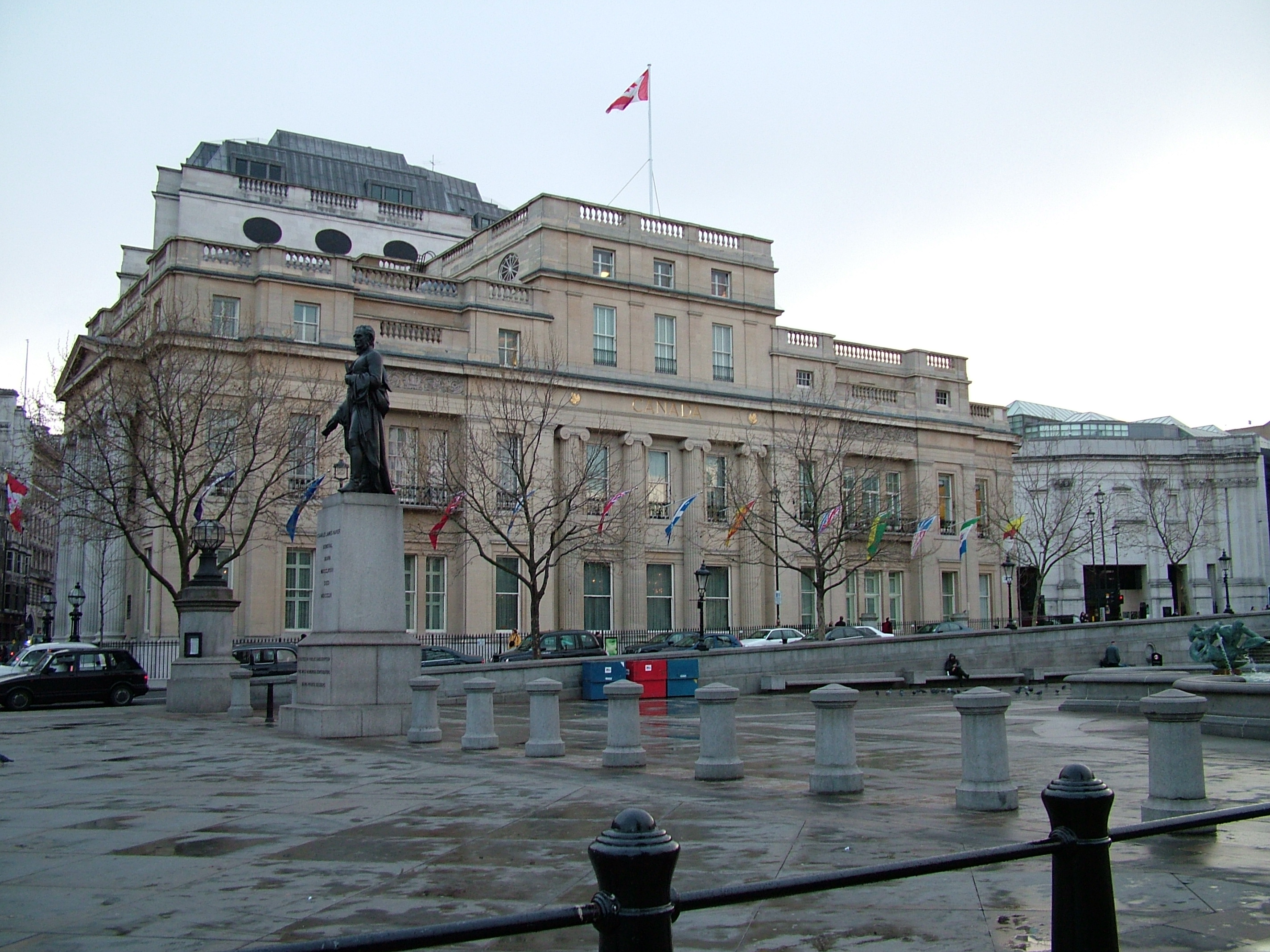
Recognition and Celebration – Canada House Welcomes Community Sponsorship champions


Celebrating Community Sponsorship of Refugees is celebrating community sponsors and their sponsored families; it is celebrating all those involved in the scheme; it is about celebrating all things Community Sponsorship encompasses. That is why I love this great scheme and want to see it flourish not only in the UK, but across the globe. That it is not the only reason for my love for the scheme. For me, it gives me chance to pay back and be amongst those who welcome newcomers. I am someone who once was seeking sanctuary, now working with many people around the United Kingdom to welcome newcomers.

I once was an asylum seeker, a detainee, a number in a detention centre in London, a refugee and now a British and global citizen. I have seen the good and the bad of the Immigration System. But there is something special in Community Sponsorship of Refugees. It is a scheme that gives both newcomers and sponsors equal voices; it is a partnership of equals; a scheme delivered in a friendly and relational way; not like a client- service provider type.

As someone who has been involved in Community Sponsorship for a while, I have had chance to meet the heroines and heroes of the scheme. Folks keen to do their bits to welcome newcomers. Newcomers working hard to rebuild their lives, integrate and become self-sufficient. Newcomers with big dreams and aspirations. Sponsors that are very creative and always ready to go extra mile to make a difference. Many of these great sponsors did not have experience of refugee resettlement in the past but have been exceeding expectations. As my good friend and one of the great champions of Community Sponsorship, Nick Coke says, “We may not be experts in refugee resettlement, but we are experts in our communities”.


8th October 2019 has a great place in the history of Community Sponsorship in the United Kingdom and globally. Sponsor Refugees, where I am a part of,  was able to bring together champions of the scheme from across the United Kingdom, North America, Ireland and Switzerland for the 2nd Community Sponsorship Awards ceremony which was hosted by prominent BBC personality and community sponsor – Claudia Hammond and Hani Arnaout, originally from Syria and resettled through Community Sponsorship, now living in Devon. Hani and his family are inspirational. It is a family that strives to succeed and fun to be around. Another newcomer highly involved in the ceremony was Falak Batak from Narberth, Wales. Falak was one of the winners of the 2018 awards and this year she had the role of presenting an award. Falak aspires to be an interior designer and promotes the scheme whenever possible. 

This year’s awards ceremony had 28 deserving nominees with great and heart catching stories. And of course, Ireland as the winner of the International Award, which was sponsored by the Global Refugee Sponsorship Initiative (GRSI); a reminder that other countries are taking stock and steeping in to see Community Sponsorship flourish in their countries. It won’t be long until we see Community Sponsorship spread across Europe and beyond.

The fact that this year’s awards ceremony took place at the spectacular Canada House was so fitting for Canada’s long standing tradition of welcome. After all Canada has introduced refugee sponsorship to the world and has always been on hand to extend expertise and support. So good to have had Canada’s Deputy Immigration Minister, Ms. Catrina Tapley, with us as the guest of honor. Canada’s High Commissioner to the UK, Her Excellency Janice Charette, welcomed guests to Canada house and said, “ It’s my pleasure to have Canada House host the Community Sponsorship Awards this year, to celebrate your collective and individual achievements in building and expanding the Community Sponsorship Scheme here in the UK.”

Among the awards presenters was prominent British actor Peter Capaldi whom many people know for his roles in Telly. Peter’s role as Doctor Who and Malcolm Tucker in The Thick of It is widely known. Peter was among the audience not as a telly man, rather as one of those involved in Community Sponsorship locally in Muswell Hill, North London. Here is Peter’s full speech. 

October 8 was about recognition and celebration, but also a reminder that the refugee crisis is still there, and it is even worse today than it was in 2015 that needs our collective efforts. It is a reminder that we need to diversify the scheme, engage not only individuals and charities, but also do more outreach works to bring Businesses, Universities, Schools and others who might be interested to welcome and integrate newcomers. An opportunity to take stock and challenge self.

© Photos 👉 @Sponsor Refugees & Ian Brodie  
© Video 👉 Bekele Woyecha

Named Sponsorship of Refugees – an idea whose time has arrived

I still remember the refugee welcome movement in 2015 and 2016. It was very heart-warming to see lots of people across the UK who were keen ...